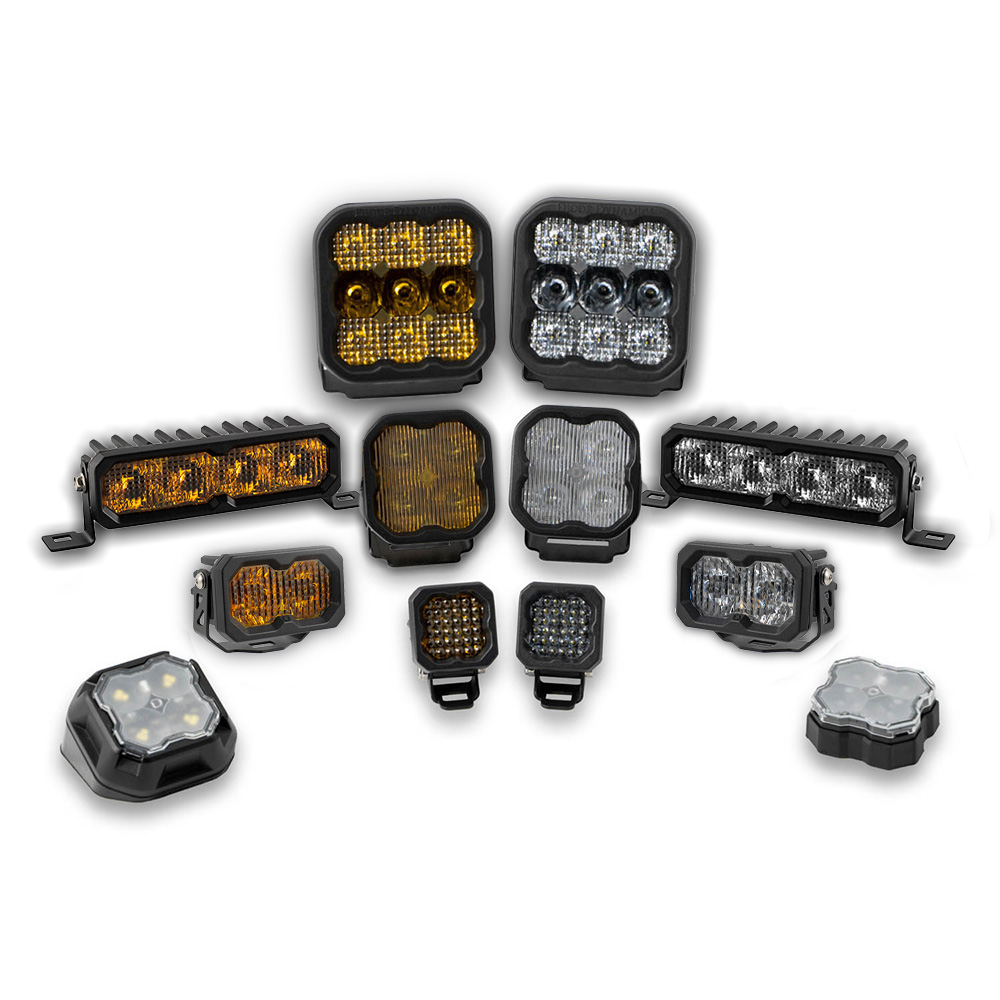
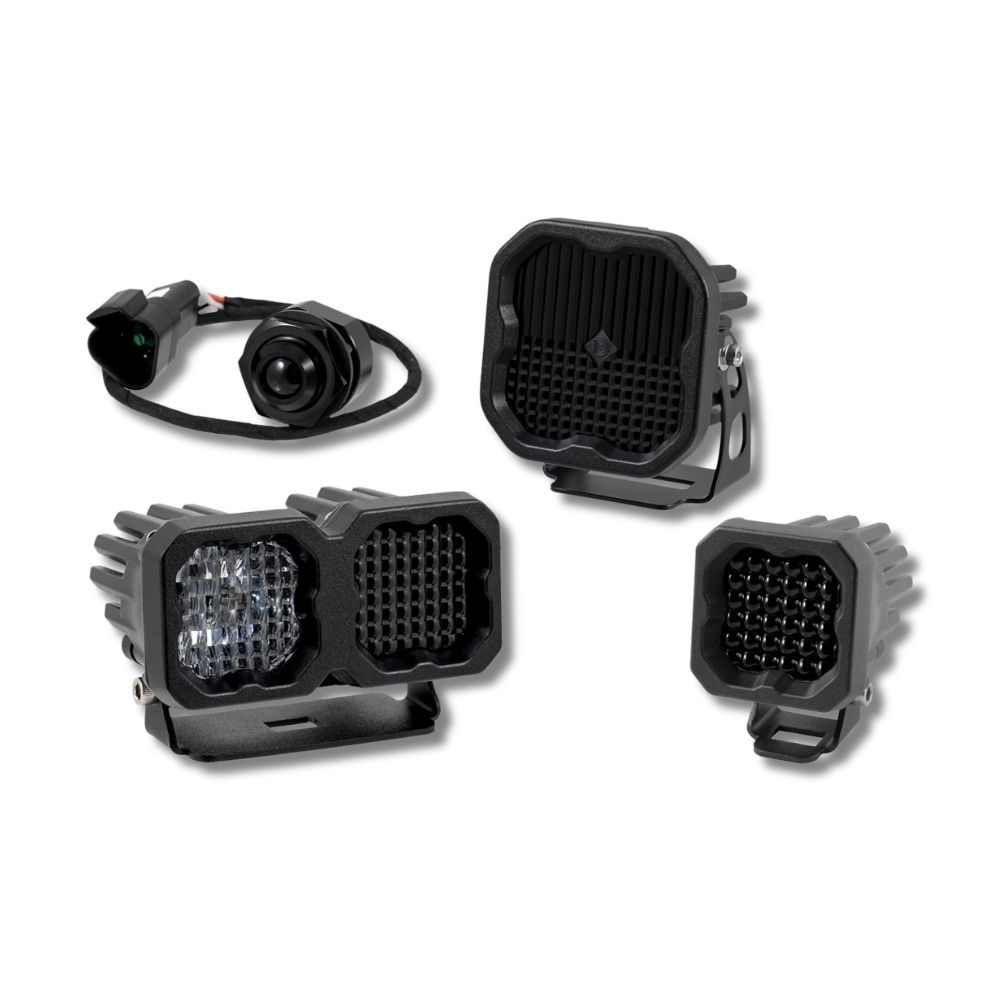



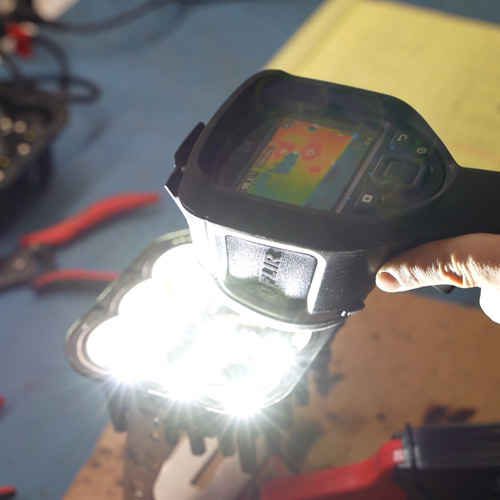
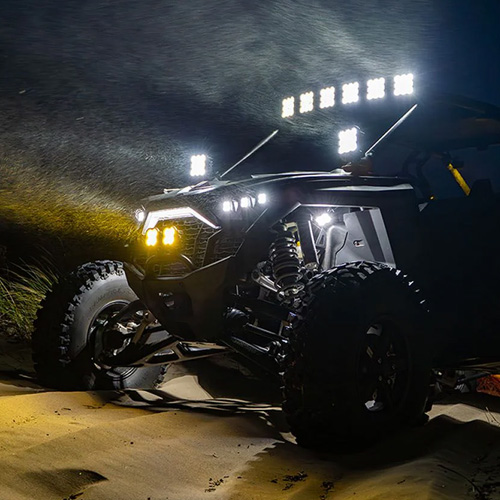
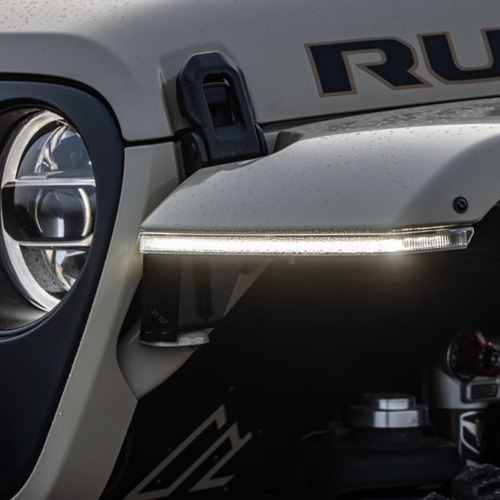

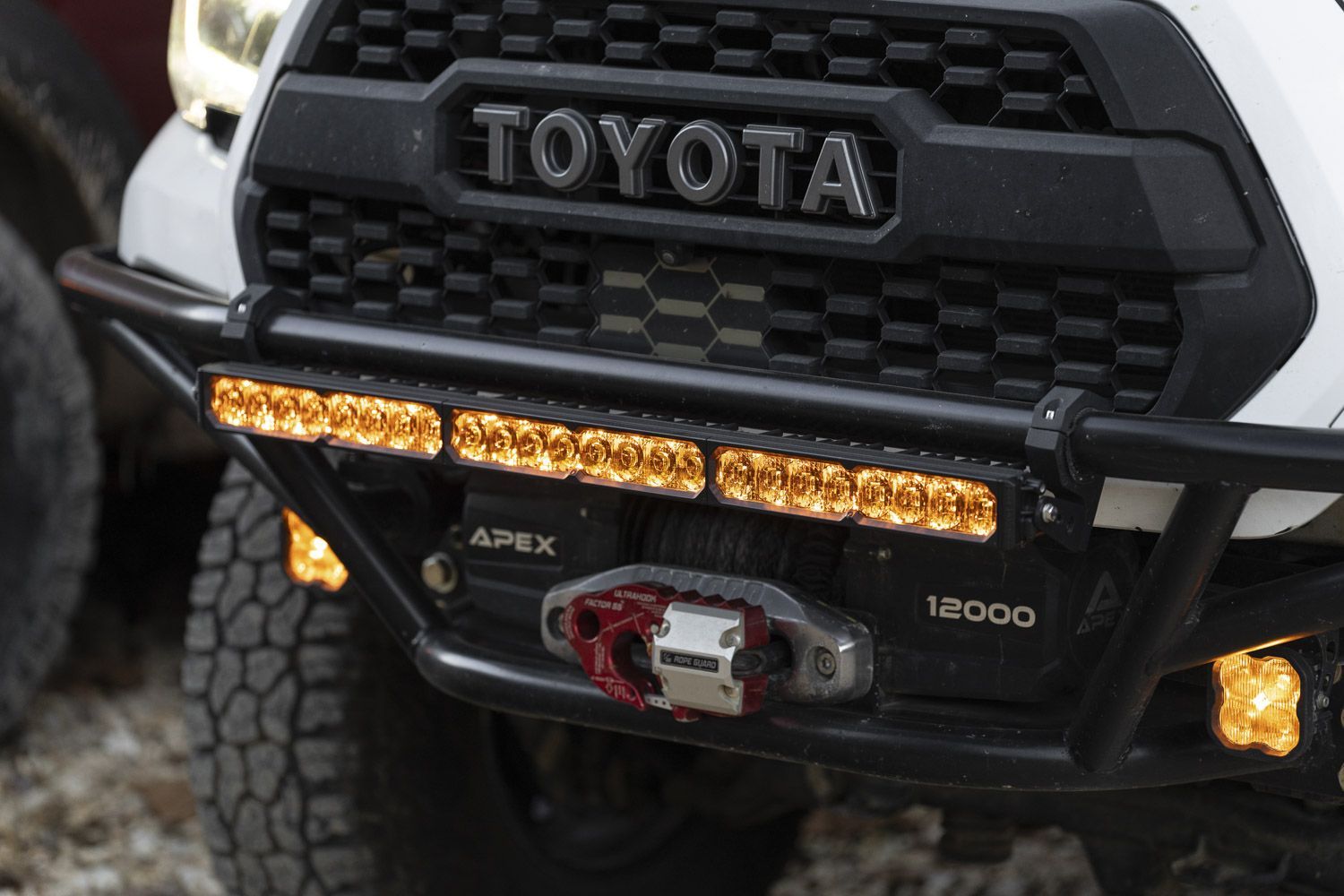
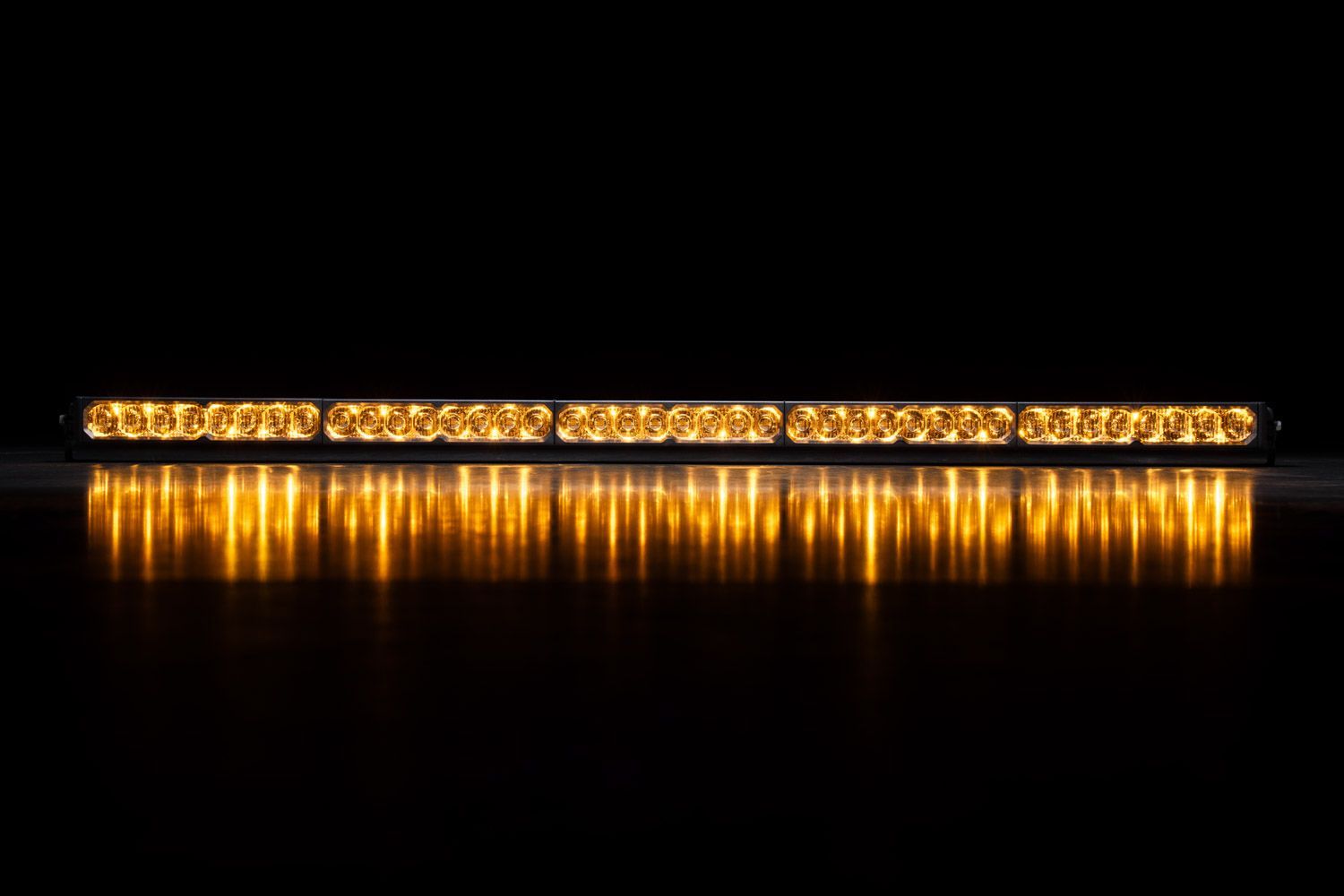
Stage Series LED Lightbars deliver serious output and durability in a completely redesigned package. Designed for maximum functionality, both options feature high-intensity LED chips, custom-engineered TIR (Total Internal Reflection) optics, and powder-coated aluminum construction built to handle the elements.
All LED Lightbars are available in 6000K cool white, 3000K selective yellow output, or dual-color and include a distinctive backlight for a unique, modern look. With their versatile beam patterns, multiple functions, and easy installation, they’re perfect for roof racks, bumpers, and more.
The following installation guide provides general instructions for mounting the new Stage Series LED Lightbars on your vehicle. Keep reading for details.
Table of Contents
Tools Needed
- 10mm socket or wrench for lightbar mounting screws
- 1/2-inch socket or wrench for mounting hardware
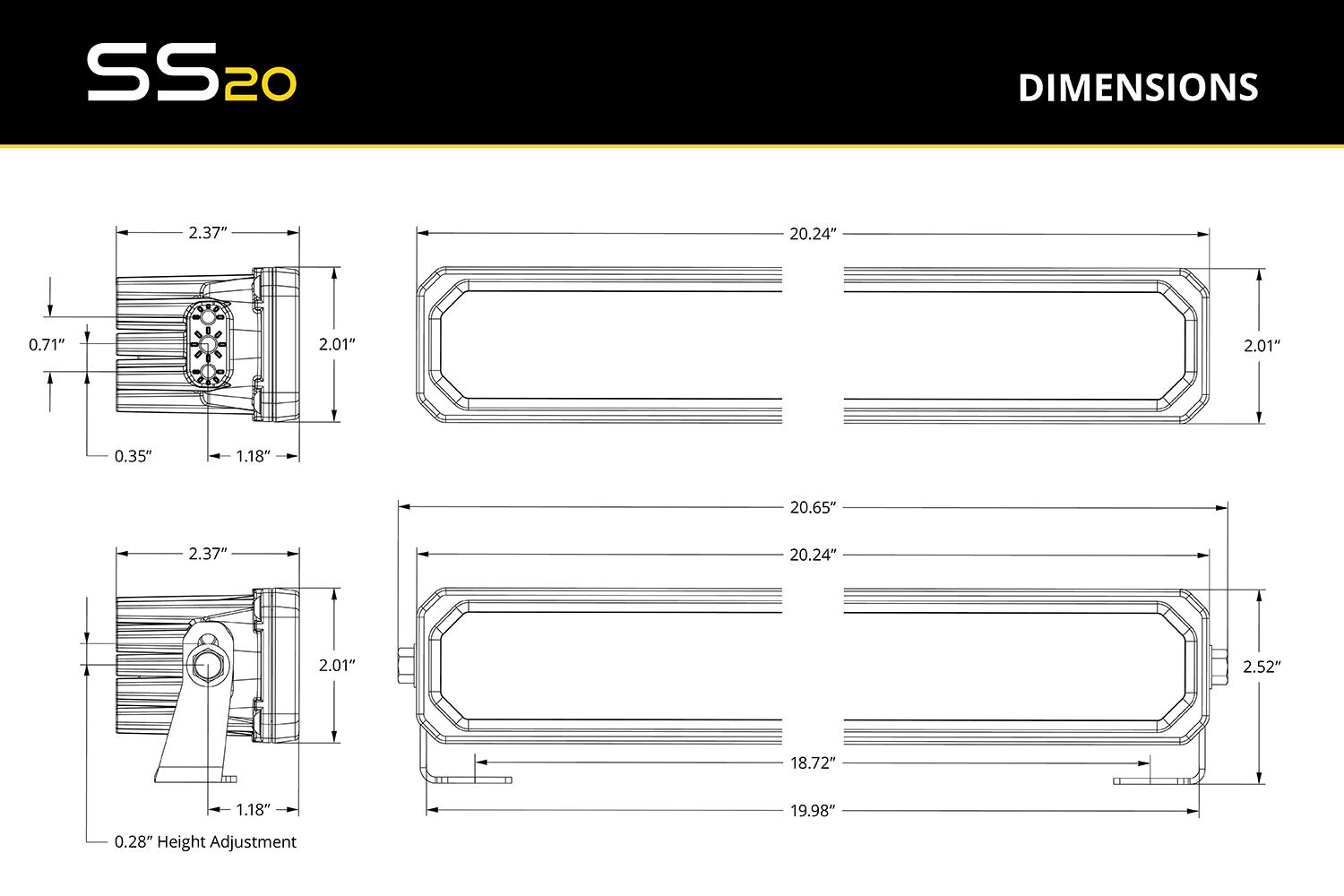
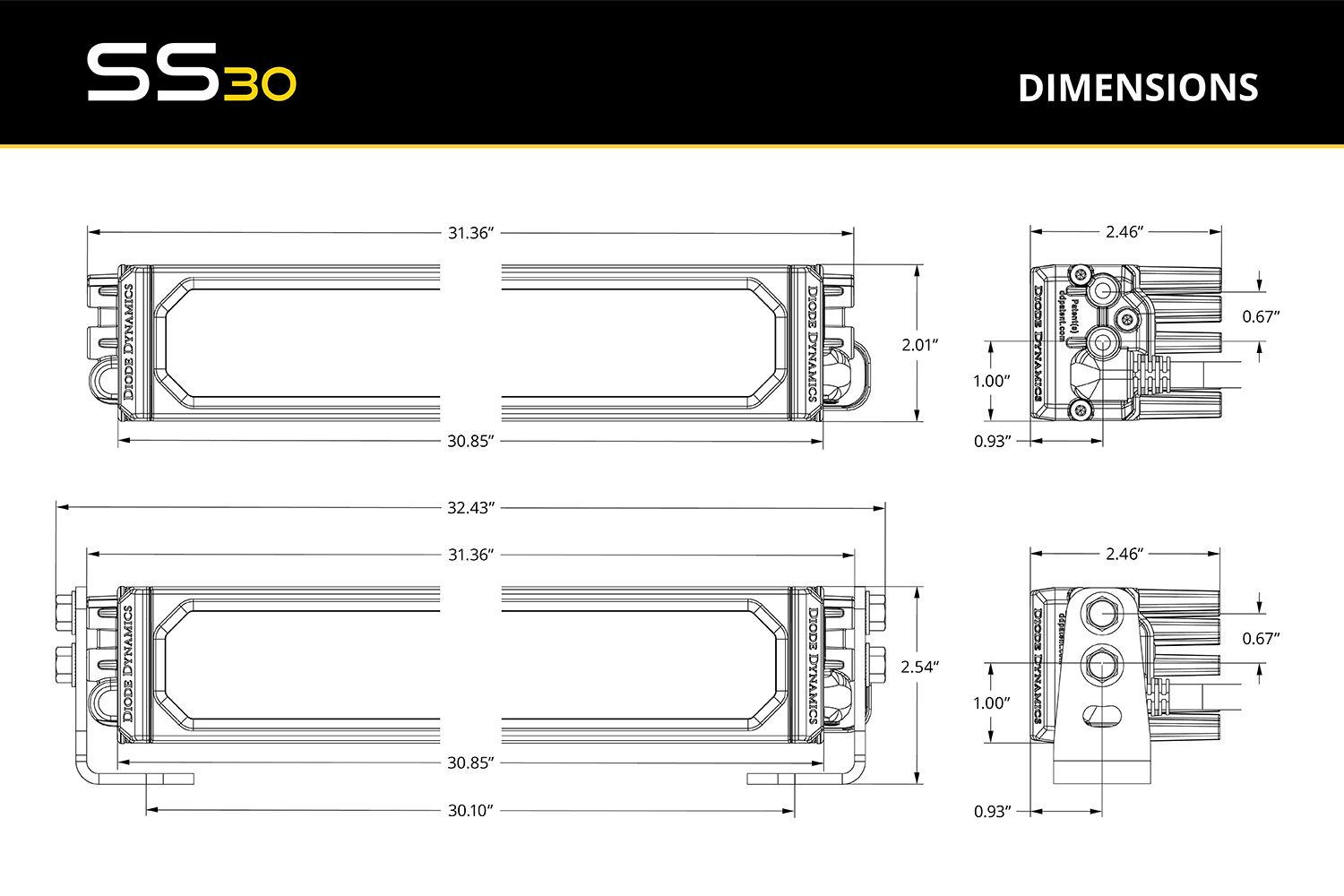
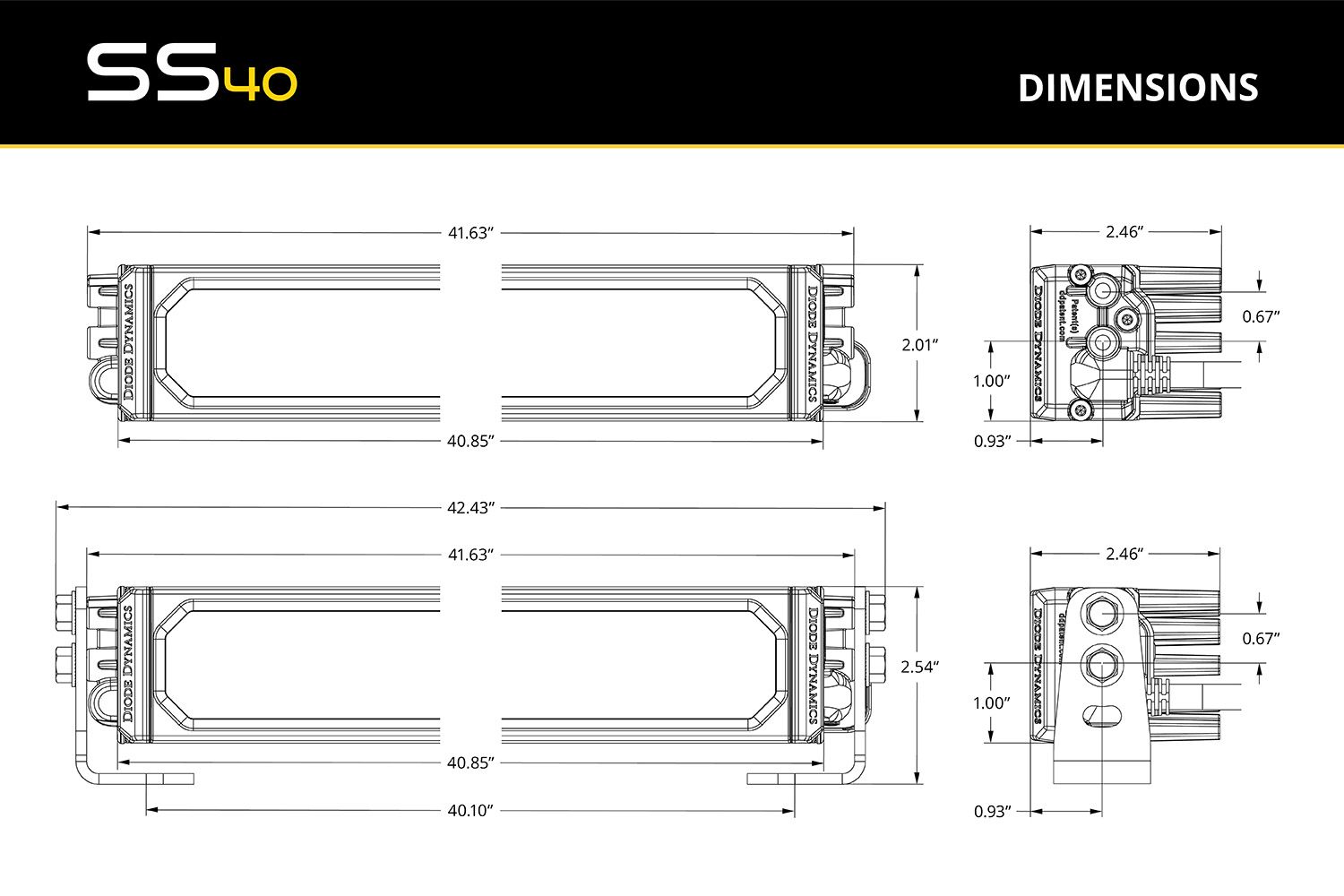
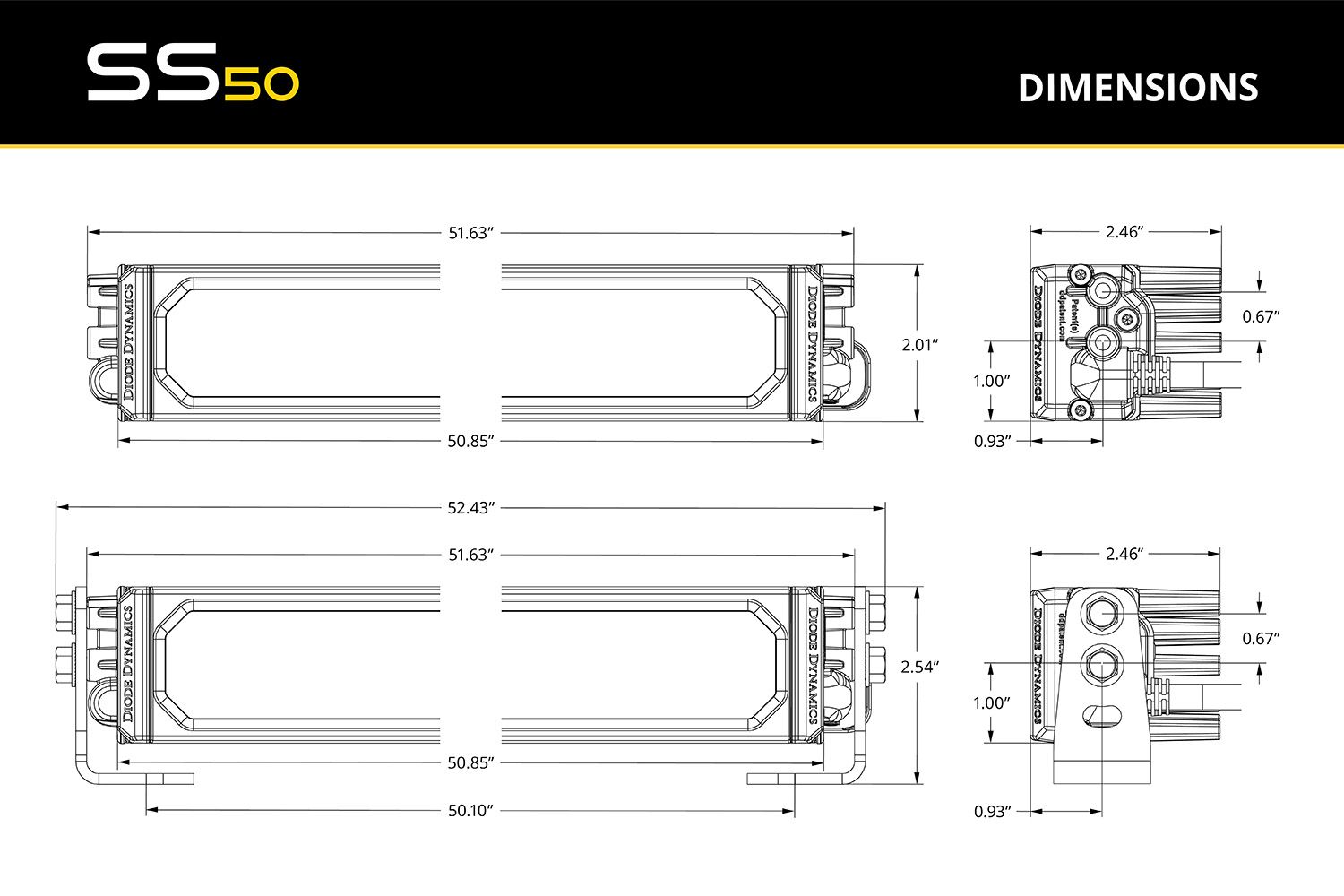
Dimensions
SS6
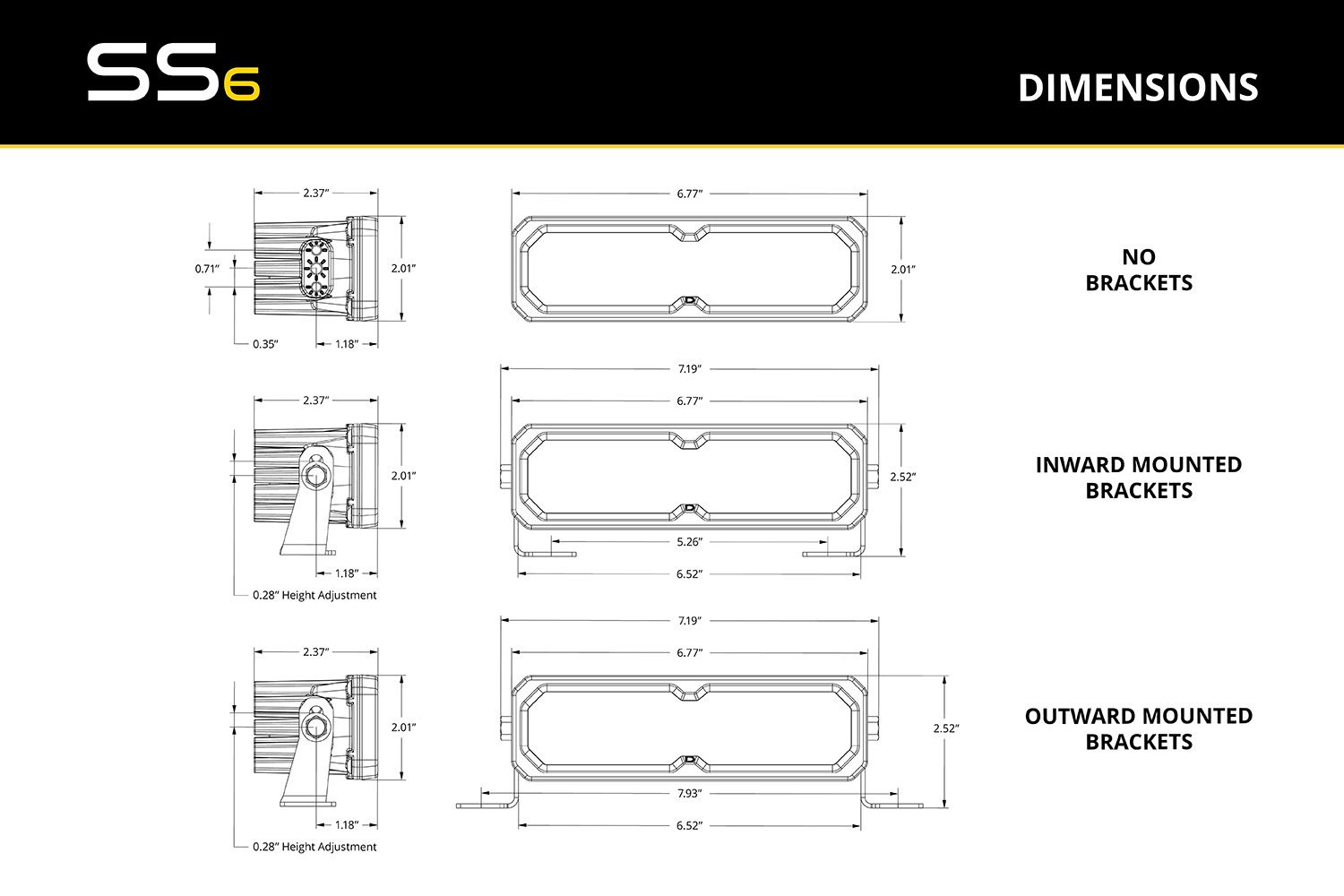
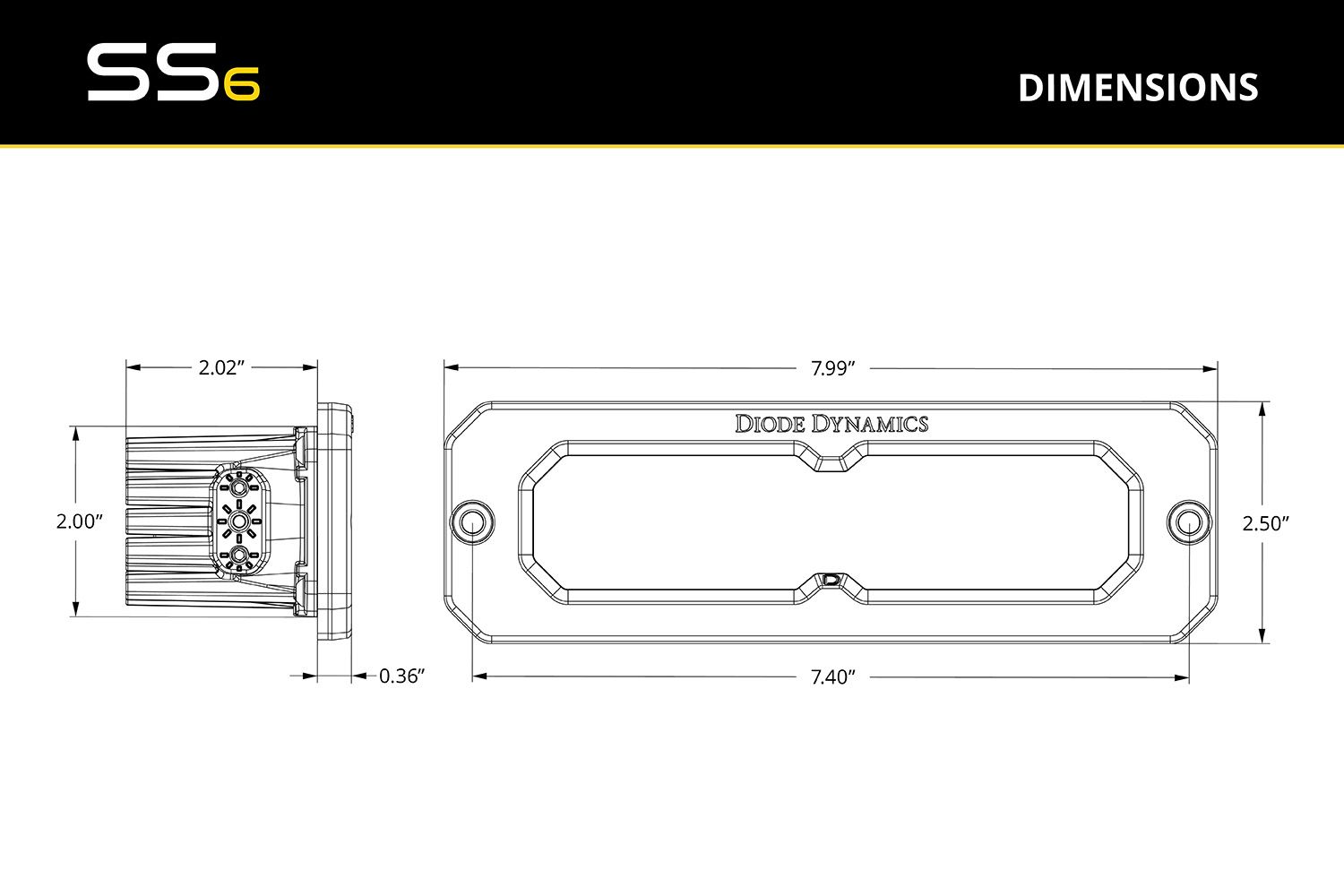
SS6 Flush
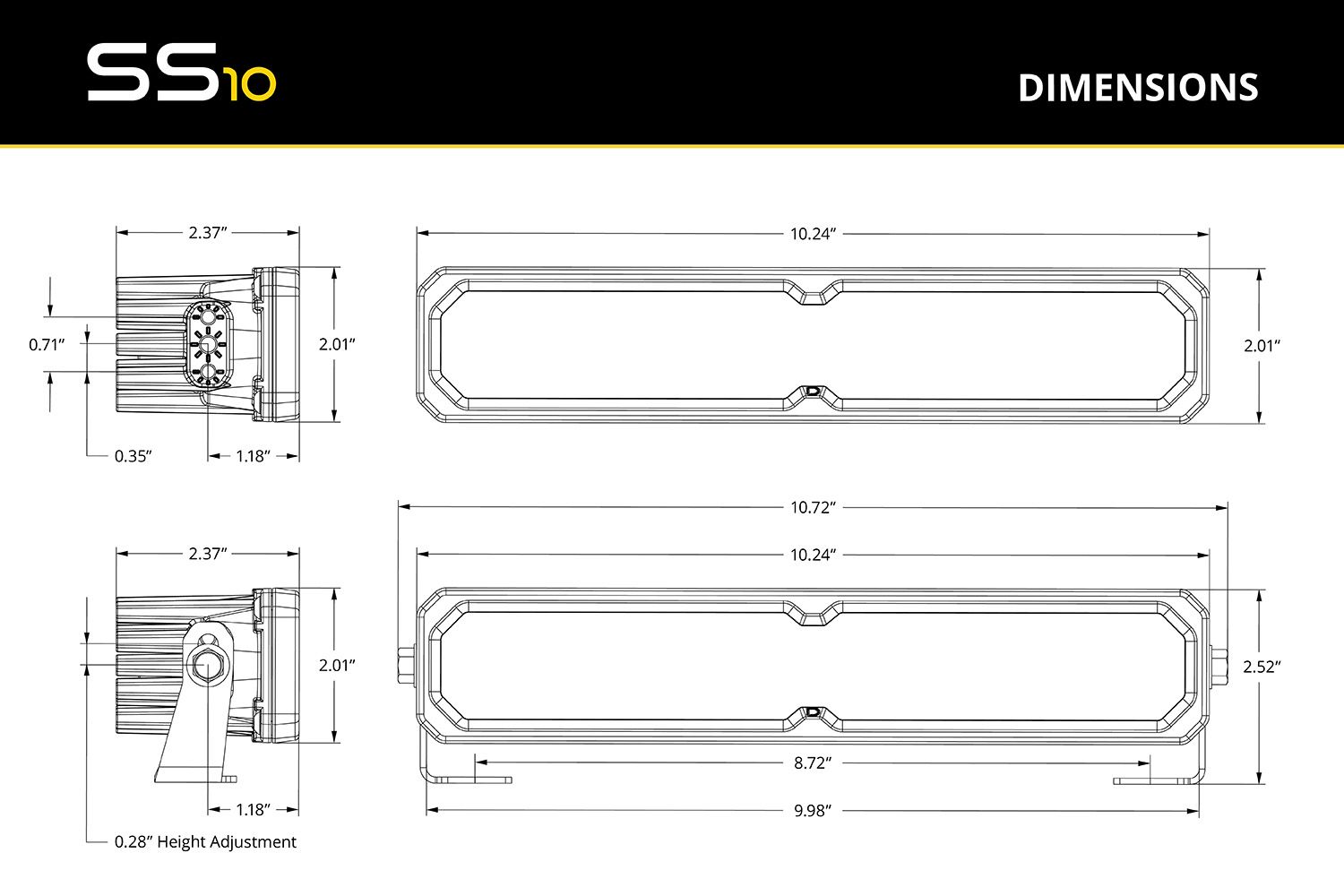
SS10
SS20
SS30
SS40
SS50
Mounting Instructions
Standard L Bracket Setup (SS6, SS10, SS20)
The standard mounting method for SS6, SS10, and SS20 Stage Series Lightbars uses two L brackets, one on each side of the lightbar. This setup allows for vertical adjustment before final tightening.
Note: The SS6 and SS10 lightbars are also compatible with the optional U-bracket. These mounting options are sold separately and are not covered in this guide.
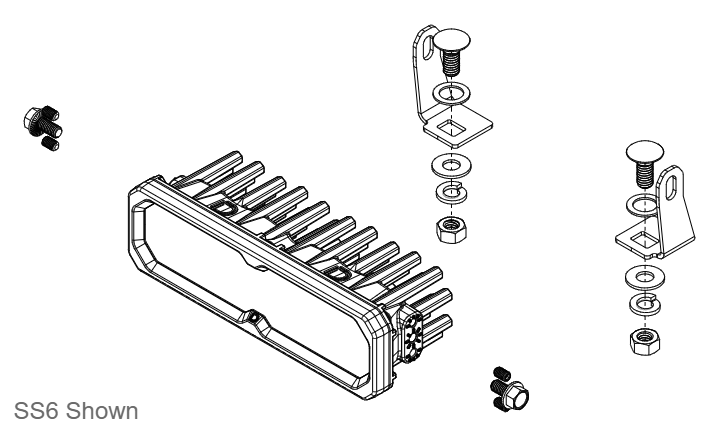
Step 1: Attach the L Brackets to the Lightbar
-
Locate the two L brackets and identify the left and right sides.
-
Align one L bracket with the threaded mounting hole on the side of the lightbar housing.
-
Install one M6 flange screw through the bracket and into the lightbar housing.
-
Repeat for the opposite side.
Leave both screws slightly loose so the lightbar can rotate for aiming.
Step 2: Install the Mounting Hardware on the Brackets
Each L bracket uses one mounting bolt to secure it to the vehicle.
For each bracket:
-
Insert the carriage bolt downward through the slotted hole in the L bracket.
-
Place a flat washer onto the carriage bolt below the bracket.
-
Add the split lock washer.
-
Thread the hex nut onto the carriage bolt.
Do not fully tighten the hardware at this stage. The bracket should remain adjustable.
Step 3: Mount the Lightbar to the Vehicle
-
Position the lightbar and bracket assembly onto the desired mounting surface.
-
Pass the carriage bolts through the mounting surface or mounting accessory.
-
Center the lightbar and verify clearance around the housing and wiring.
Snug the nuts just enough to hold the lightbar in place while still allowing adjustment.
Step 4: Aim the Lightbar
-
Rotate the lightbar within the L brackets to set the desired vertical beam angle.
-
Slide the brackets as needed to fine tune left to right positioning.
Final aiming should be done with the vehicle on level ground.
Step 5: Final Tightening
-
Tighten the M6 screws securing the L brackets to the lightbar housing.
-
Fully tighten the nuts securing the brackets to the mounting surface.
Tighten hardware evenly on both sides to ensure proper alignment.
Tip
Perform final aiming at night with the lightbar powered on before fully tightening all hardware.
Standard L Bracket Setup (SS30, SS40, SS50)
SS30, SS40, and SS50 Stage Series Lightbars use a larger L bracket system designed to support the increased size and weight of these lightbars while still allowing vertical aiming adjustment before final tightening.
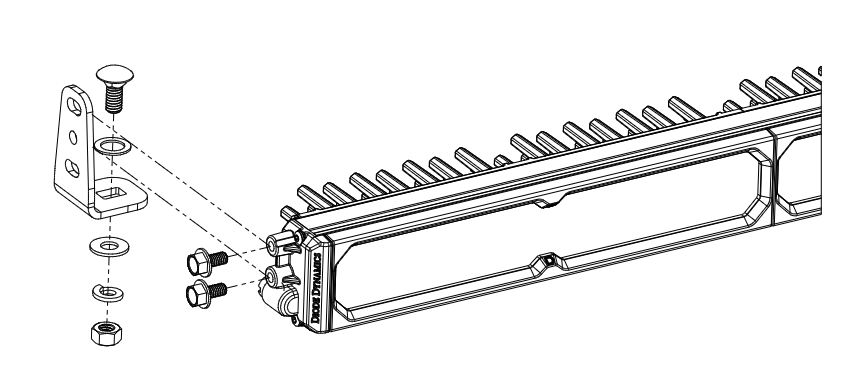
Step 1: Attach the L Brackets to the Lightbar
-
Locate the two L brackets and position one at each end of the lightbar housing.
-
Align the bracket with the threaded mounting holes on the side of the lightbar.
-
Install two M6 flange screws through the bracket and into the lightbar housing.
-
Repeat for the opposite side.
Leave all four screws slightly loose so the lightbar can rotate for aiming.
Step 2: Install the Mounting Hardware on the Brackets
Each L bracket uses one mounting bolt to secure it to the vehicle.
For each bracket:
-
Insert the carriage bolt downward through the slotted hole in the L bracket.
-
Place a flat washer onto the carriage bolt below the bracket.
-
Add the split lock washer.
-
Thread the hex nut onto the carriage bolt.
Do not fully tighten the hardware yet. The bracket should remain adjustable.
Step 3: Mount the Lightbar to the Vehicle
-
Position the lightbar and bracket assembly onto the desired mounting surface.
-
Pass the carriage bolts through the mounting surface or mounting accessory.
-
Center the lightbar and verify clearance around the housing, wiring, and cooling fins.
Snug the nuts enough to hold the lightbar in place while still allowing adjustment.
Step 4: Aim the Lightbar
-
Rotate the lightbar within the L brackets to set the desired vertical beam angle.
-
Adjust left-to-right positioning as needed using the bracket slots.
Final aiming should be performed with the vehicle on level ground.
Step 5: Final Tightening
-
Tighten the M6 screws securing the L brackets to the lightbar housing.
-
Fully tighten the nuts securing the brackets to the mounting surface.
Tighten hardware evenly on both sides to ensure proper alignment and support.
Tip
Due to the size of these lightbars, having a second person assist during aiming and tightening can make installation easier.
Flush Mount Setup (SS6-only)
The SS6 Flush Mount Bracket Kit is designed for panel-style installations where the lightbar mounts behind a flat surface such as a bumper, bed panel, or valance. This setup allows the bezel to sit flush against the exterior surface for a clean, integrated look.
Before beginning installation, download and print the official drilling template: Download the SS6 Flush Mount Template Here
Note: When printing, ensure scale is set to 100%.
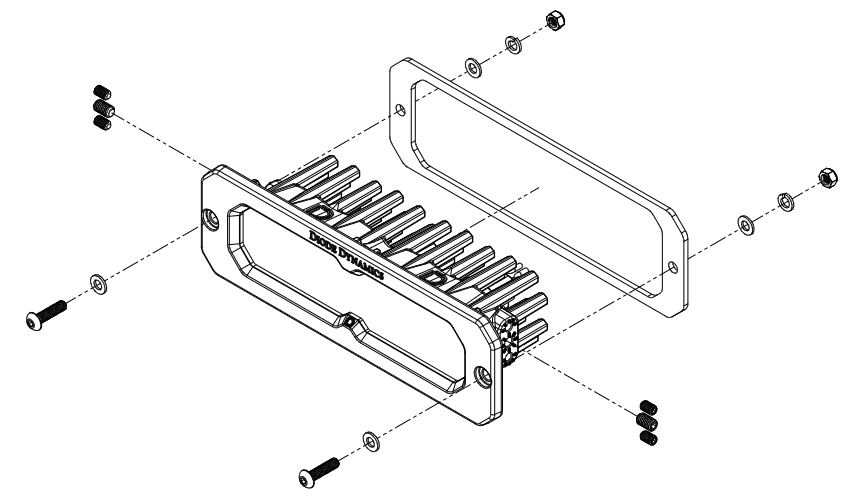
Step 1: Prepare the Mounting Surface
-
Cut out only the dotted lines on the printed drilling template, including the two outside holes.
-
Confirm your mounting surface is flat and provides at least 2-1/8 inch by 6-7/8 inch of usable area.
-
Ensure there is a minimum of 3 inches of depth behind the surface to accommodate the lightbar and wiring harness.
-
Attach the template to the mounting surface using tape.
Step 2: Mark and Verify Alignment
-
Mark the two drill hole locations and the center cutout area using a marker.
-
Remove the template.
-
Place the included gasket over your marked area to verify proper alignment.
-
Adjust markings if necessary before cutting.
Step 3: Cut the Mounting Opening
-
After confirming alignment, cut along the marked center section using appropriate cutting tools.
-
Drill the two mounting holes to 5.5mm.
-
File down any rough edges or excess material to allow the lightbar housing to fit cleanly inside the opening.
The housing should pass through the cutout while the bezel rests flush against the exterior surface.
Step 4: Install the Gasket and Lightbar
-
Attach the included gasket to the backside of the flush bracket.
-
Insert the lightbar assembly into the cutout from the front side.
-
Ensure the bezel sits evenly and flush against the panel surface.
The gasket provides sealing between the bracket and mounting surface.
Step 5: Secure the Assembly
-
From the rear side of the mounting surface, position the bracket and align the mounting holes.
-
Install the included hardware as shown in the diagram.
-
Tighten evenly until secure.
Do not overtighten.
SS6 Classic to SS6 New Gen Adapter
Certain SS6 lightbar kits include a mounting adapter bracket to ensure proper compatibility with select mounting brackets.
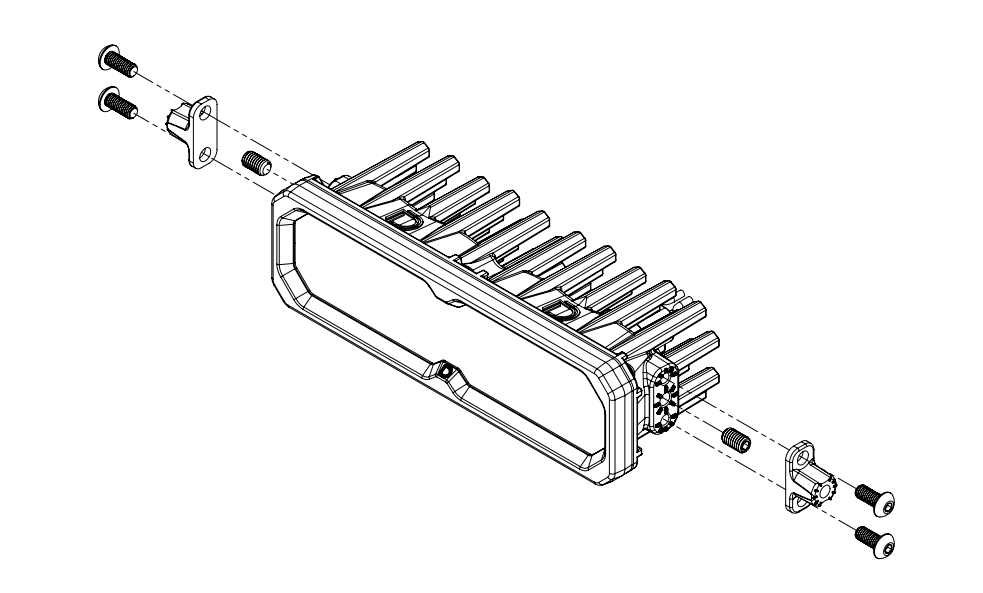
If your SS6 includes this adapter, it must be installed onto the lightbar before attaching the lightbar to the primary mounting brackets.
-
Install the included set screws in the center mounting position on both sides of the lightbar housing.
-
Position the adapter bracket against the lightbar.
-
Secure the adapter using the included Torx screws in the top and bottom mounting holes.
-
Once the adapter is secured, mount the lightbar to the main bracket using the supplied mounting hardware as outlined above.
Ensure all hardware is tightened securely before final aiming.
Wiring Instructions
SS6, SS10, and SS20 Stage Series LED Lightbars have an integrated Deutsch-style connector located on the back of the bar, just below the pin-fin heatsink, that securely fits the included Deutsch-style connectors.
The bigger Lightbars (SS30, SS40, & SS50) come with a DTP (Deutsch Terminal Power) that are designed for high current applications with a wire lead coming directly out the side of the bar.
-
Determine a suitable location to mount the relay, near the battery or main power terminal.
-
Connect the red power input wire to the positive battery/power terminal. Connect the black ground wire to the negative battery terminal or a factory grounding point.
-
METHOD ONE - Add New Switch to Vehicle.
-
Determine a suitable location to mount the switch in the cabin of the vehicle. Route the switch wiring to that location. This may require going through the vehicle firewall. We recommend following the path of the factory wiring harness, and unplugging the switch while routing the wires.
-
Drill a 3/4 inch hole and mount the switch. Reconnect wires to switch, with the red wire in the center position
-
-
METHOD TWO - Use OEM Upfitter/Auxiliary Switches.
-
An extra wire pigtail is included with this harness, which should be used if you plan to control your lights with factory-installed “OEM” switches. At the white connector, unplug the switch wires from the harness, and connect the extra pigtail here instead.
-
Using the butt connectors at the end of the pigtail, crimp the yellow wire and blue wire to OEM Auxiliary Switch wire leads. The yellow wire will activate the main LED power, and the blue wire will activate the backlight LED power
NOTE: The main LED power will be drawn from the battery, so any OEM Auxiliary Switch wires can be used, regardless of amperage rating.
-
-
Route the output wire(s) to each LED, avoiding any moving parts or direct contact with heat sources. Plug the output connector into the LED.
-
Test thoroughly, and aim the LED appropriately based on use. Please check your local laws and regulations regarding aiming, installation, and restrictions for on-road use, as applicable.
Note: This auxiliary lamp draws high current and requires adequately-sized wiring for safe operation. If you are not using a Diode Dynamics wire harness, use a wire sized 16 AWG or larger for main power and ground. Use a wire sized 18 AWG or larger for the backlight (blue wire on the pigtail). Please be mindful of current ratings and wire size, especially if splitting power signals to multiple lights or using switches. If you have any questions, please feel free to contact us for assistance.
SmartSelect Programming
Stage Series Lightbars equipped with SmartSelect feature built-in programming for both the main beam and the backlight. Programming is performed using simple power cycles and works with any control method, including toggle switches, relay harnesses, or switch panels.
A built-in timing delay is included to prevent accidental programming from strobe functions or rapid switching. Each power cycle must be deliberate, with approximately one second between each ON press.
Main Beam Programming (SS30 and Larger SmartSelect Lightbars Only)
SmartSelect allows control over how the main beam operates. Depending on configuration, the lightbar can be set to run inner sections only, outer sections only, or the full bar.
-
Start with the main beam powered OFF.
-
Turn the main beam ON and OFF four times, spacing each ON press about one second apart.
-
On the fourth power cycle, the lightbar will enter programming mode.
-
Continue cycling power at the same steady pace to scroll through the available modes.
-
When the desired mode is displayed, leave the main beam ON.
-
After several seconds, the selection will save automatically and exit programming mode.
The selected mode will be retained during normal operation.
Backlight Color Programming
SmartSelect backlights offer multiple color options, including White (default), Red, Blue, Green, Purple, Yellow, Amber, and Teal.
-
Start with all backlight power OFF.
-
Cycle backlight power ON and OFF three times within three seconds, spacing each ON press about one second apart.
-
After the third cycle, the backlight will enter programming mode.
-
Continue cycling power at the same steady pace to scroll through the available colors.
-
When the desired color is displayed, leave the backlight ON.
-
After five seconds, the color will save automatically and exit programming mode.
-
Turn power OFF.
The selected color will appear any time backlight power is applied during normal operation.
Backlight Color Reset
If multiple SmartSelect products are connected to the same backlight circuit and colors become unsynchronized, perform the following reset procedure.
-
Enter backlight programming mode by cycling power ON and OFF three times, using the same one-second timing.
-
Continue cycling power through all available colors twice. This requires at least sixteen total power cycles.
-
After all colors have displayed twice, all connected lights will reset to White.
-
Leave the backlight ON for five seconds to save the reset.
-
Program the desired backlight color as outlined above if needed.
Questions About the Installation?
If you have any questions or issues installing the Stage Series Lightbars, please contact us for further information.
Where Can I Buy a Stage Series LED Lightbar?
If you're ready to upgrade your vehicle with Stage Series Lightbars, you can purchase them by clicking here, or by using our dealer locator to find a dealer near you.
Want to know more about Diode Dynamics products? Visit DiodeDynamics.com and subscribe to our newsletter for new product releases and more!
This Installation Guide is for the following SKUs: DD8180, DD8181, DD8182, DD8183, DD8184, DD8185, DD8186, DD8187, DD8188, DD8189, DD8190, DD8191, DD8192, DD8193, DD8194, DD8195, DD8196, DD8197, DD8198, DD8199, DD8200, DD8201, DD8202, DD8203, DD8204, DD8205, DD8206, DD8207, DD8208, DD8209, DD8210, DD8211, DD8212, DD8213, DD8214, DD8215, DD8216, DD8217, DD8218, DD8219, DD8220, DD8221, DD8222, DD8223, DD8224, DD8225, DD8226, DD8227, DD8228, DD8229, DD8230, DD8231, DD8232, DD8233, DD8234, DD8235, DD8236, DD8237, DD8238, DD8239, DD8252, DD8253, DD8254, DD8255, DD8256, DD8257, DD8258, DD8259, DD8260, DD8261, DD8262, DD8263, DD8264, DD8265, DD8266, DD8267, DD8268, DD8269, DD8270, DD8271, DD8272, DD8273, DD8274, DD8275, DD8375, DD8377, DD8378, DD8379, DD8380, DD8381, DD8382, DD8383, DD8385, DD8386, DD8387, DD8388, DD8389, DD8390, DD8391, DD8392, DD8393, DD8394, DD8395, DD8396, DD8397, DD8399, DD8400, DD8401, DD8402, DD8403, DD8404, DD8405, DD8406, DD8407, DD8408, DD8409, DD8410, DD8411, DD8413, DD8414, DD8415, DD8416, DD8417, DD8418, DD8419, DD8420, DD8421, DD8422, DD8423, DD8424, DD8425, DD8427, DD8428, DD8429, DD8430, DD8431, DD8432, DD8433, DD7781, DD7782, DD7783, DD7784, DD7785, DD7786, DD7787, DD7788, DD8644, DD8645, DD8646, DD8647, DD8648, DD8649, DD8650, DD8651, DD8652, DD8653, DD8654, DD8655, DD8657, DD8659S, DD8781, DD8801, DD8815

Share This Post